Roof
Installers check the material, age, pitch and structure. A roof that needs repair in a few years is easier to fix before panels go up than after. Note which faces get the most sun for your latitude and photograph each one.

Get ready for a site survey: a checklist that remembers your progress in this browser, and short guides on what installers look at.
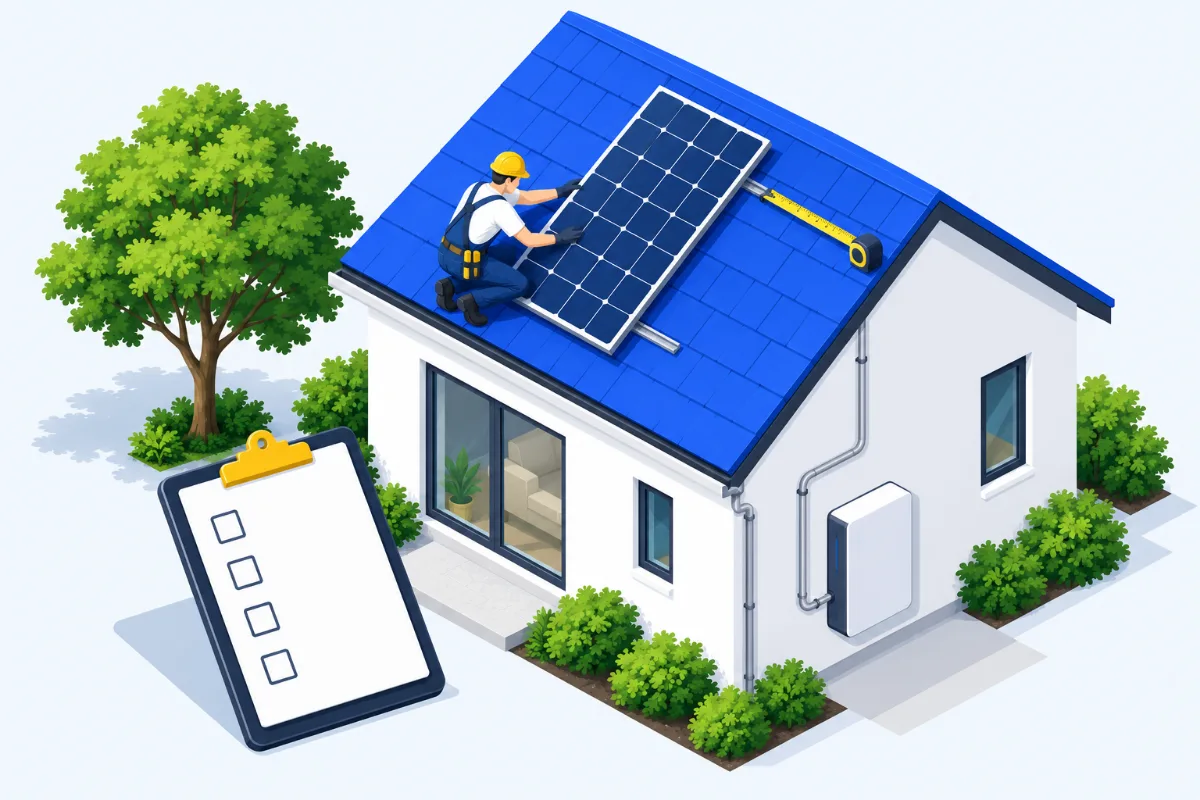
Installers check the material, age, pitch and structure. A roof that needs repair in a few years is easier to fix before panels go up than after. Note which faces get the most sun for your latitude and photograph each one.
Even a small shadow can cut the output of a whole panel string. Look at the roof at three times of day, and again in a different season if you can. Trees grow, so ask the installer how shade is handled and whether panel-level optimisation makes sense.
Long cable runs lose energy and cost more. Find where the panels, inverter and main panel will sit and measure the path between them. Take a clear photo of your main panel label and breakers, and ask what upgrades, if any, your installer would need to make.
Batteries like a dry, ventilated, reachable spot away from direct sun and heat. Keep clear space as the manufacturer’s instructions require, and avoid places that flood. Closer to the inverter usually means shorter cables. Always follow the product manual and local rules.
Connected sensors send production, use and battery data to an app. Good monitoring does more than show numbers: it helps decide when to charge, when to spend stored power and when something looks wrong. Check the signal strength where the gateway will sit, and ask who can see the data and how it is protected.